Amellya: Crafting Visual Stories with a Floral Touch
Every project, whether it's a startup's first logo or a seasoned publisher's book cover, relies on visual language to connect with its audience. The fonts we choose are not just letters; they are the voice of our message. In a landscape saturated with stark minimalism and geometric precision, there is a growing desire for typography that feels more organic, more human, and more expressive. This is where a premium font like Amellya finds its purpose. It is a creative font designed to inject a sense of handcrafted beauty and natural elegance into any composition.
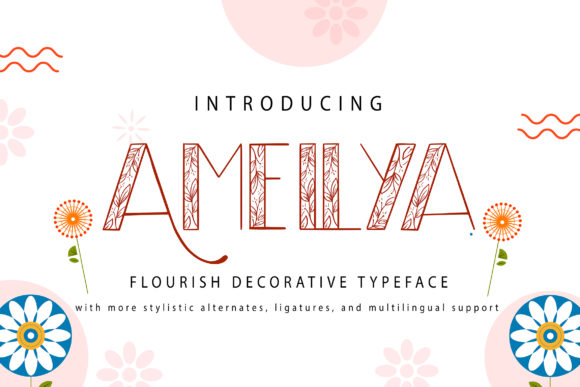
Amellya is best described as a display font with a distinct flower themed style. Its letterforms are defined by delicate, flowing strokes that mimic the organic curves of petals and vines. Unlike a traditional script font that aims for pure calligraphic accuracy, Amellya embraces a more decorative and illustrative quality. The personality it conveys is one of romance, whimsy, and thoughtful craftsmanship. This makes it a powerful asset for projects that need to feel personal and heartfelt, moving beyond the cold efficiency of a standard sans serif font or the formal structure of a classic serif font. It stands as a piece of art in itself, perfect for making a headline or a brand name unforgettable.
Where Amellya Truly Blossoms: Ideal Applications
Understanding a font's strengths is key to using it effectively. Amellya's ornate nature makes it a specialist, not a generalist. Its ideal applications are those where it can be a focal point without being forced into a role it wasn't designed for.
- Greeting Cards and Invitations: This is Amellya's natural habitat. For wedding invitations, baby shower announcements, or heartfelt greeting cards, the font immediately establishes a tone of celebration and care. Its flower themed style aligns perfectly with the celebratory and personal nature of these items.
- Branding and Logo Design: For businesses in the wedding industry, floral design, artisanal bakeries, or boutique perfumeries, Amellya can form the core of a brand identity. A logo set in Amellya communicates elegance, nature, and a hands-on approach. It tells a customer they are dealing with a brand that values beauty and detail.
- Editorial and Publishing: In editorial design, such as the cover of a romance novel, a lifestyle magazine feature, or a chapter title, Amellya can add a touch of sophistication. It draws the reader in and sets a specific mood before they even read the first sentence of the body copy.
- Quotes and Social Media Graphics: A powerful quote needs a powerful delivery. Using Amellya for key phrases on social media graphics or posters can increase engagement. Its visual flair makes the text shareable and memorable, turning a simple message into a piece of visual content.
- Packaging and Product Labels: For small-batch products like artisanal soaps, gourmet jams, or floral teas, Amellya can elevate the packaging design. It helps a product stand out on a shelf by communicating a story of natural ingredients and careful production.
From Font File to Finished Design: A Practical Guide
Choosing a beautiful typeface is only the first step. The real skill lies in its application. Integrating a display font like Amellya into a professional project requires a strategic approach to ensure it enhances, rather than hinders, your communication.
Mastering Readability and Hierarchy
Amellya is a display font, which means it is designed for impact at larger sizes. It excels in headlines, titles, and short, prominent text blocks. Attempting to use it for long paragraphs or fine print will almost certainly compromise readability. The intricate details that make it beautiful at 48pt can become a visual jumble at 10pt. The most effective modern typography creates a clear visual hierarchy. Use Amellya for your primary heading to grab attention, and then pair it with a highly legible sans serif font or a clean serif font for the body text. This contrast not only ensures your message is understood but also makes the decorative heading stand out even more.
Evaluating Project Fit and Audience
Before committing to Amellya, consider your project's goals and audience. Is the tone romantic, whimsical, and elegant? If so, it's likely a perfect fit. However, if the project requires a tone of corporate seriousness, technological innovation, or stark minimalism, a floral handwritten font might send the wrong message. A brand strategist knows that every design asset must align with the brand's core values. For an audience of 20- to 50-year-olds who appreciate craftsmanship and aesthetic detail, Amellya can be a powerful tool for connection.
Testing Font Pairings
The success of a font pairing is subjective, but some principles can guide you. The goal is to find a companion font that complements Amellya without competing with it.
- With a Sans Serif: Pairing Amellya with a simple, geometric sans serif (like Montserrat or Lato) creates a beautiful balance. The clean lines of the sans serif provide a modern, stable foundation that allows the flourishes of Amellya to shine without overwhelming the design.
- With a Serif: For a more classic, literary feel, consider pairing it with an elegant serif font (like Garamond or Playfair Display). This combination works well in editorial design for projects like book covers or magazine layouts, evoking a sense of timeless sophistication.
Understanding Licensing and Font Styles
When you invest in a commercial font like Amellya, you are also investing in a license that dictates how you can use it. Always review the license agreement. Most standard licenses cover desktop use for print and logo design, but you may need an extended license for use in mobile applications, software, or high-volume web design via @font-face embedding. Additionally, check what styles are included. Does the font family come with alternates, ligatures, or different weights? These features are design assets that can add variety and custom flair to your typography, allowing you to create more unique and polished final products.
Ultimately, a font like Amellya is more than just a collection of glyphs. It is a tool for storytelling. By understanding its personality, respecting its strengths, and applying it with intention, designers, entrepreneurs, and creators can use it to craft visuals that are not only seen but truly felt. It offers a way to build a brand identity that is authentic, memorable, and deeply connected to an appreciation for natural beauty.